Rooftop Solar on a Factory: A Step-by-Step Guide for Industrial Facilities
From structural assessment to commissioning — the correct decision order for an industrial facility, and how the 2026 regulation affects the installed-capacity decision.
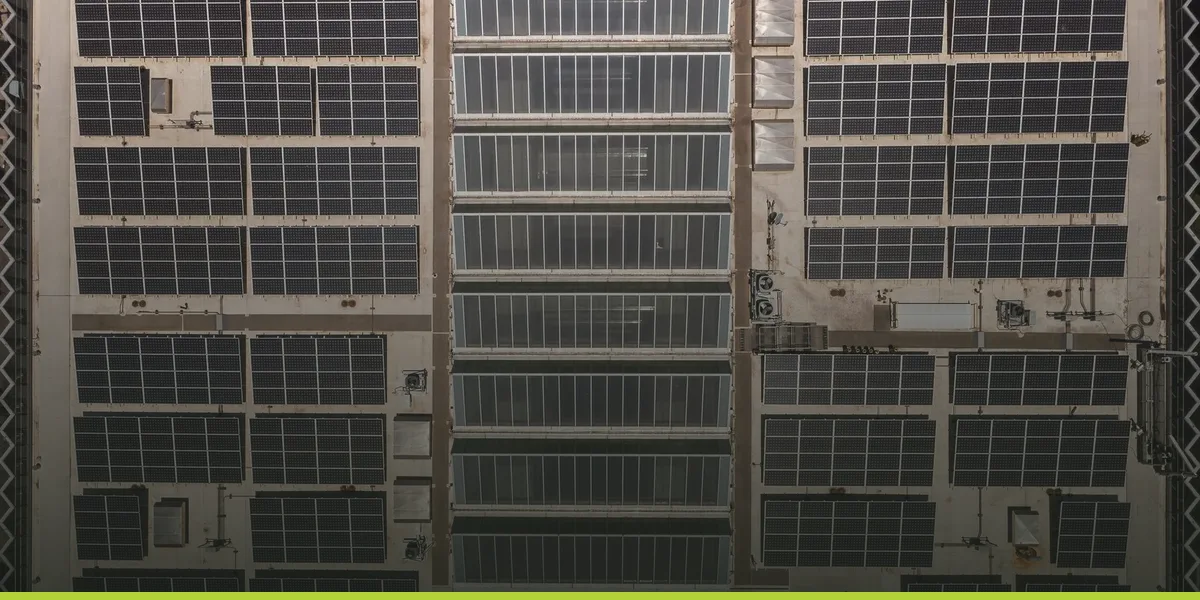
For industrial companies considering a rooftop solar plant, this guide explains the core decision steps: from roof suitability assessment to determining installed capacity, from the impact of hourly netting to the permitting process, and from investment cost to operations and maintenance.
| TECHNICAL REVIEW | UPDATED | READING TIME |
|---|---|---|
| Alkın Ankaralı — Deputy General Manager, Energy Projects | August 2026 | 14 minutes |
Contents
- Summary in five sentences
- Why is a factory roof an advantageous surface?
- Roof suitability assessment
- What determines installed capacity?
- Why does 2026 hourly netting matter?
- How does the permitting process work?
- What determines the cost?
- What happens after installation?
- Six common mistakes
- Frequently asked questions
- Where do you start?
In industrial facilities, electricity is one of the largest cost items at most sites. The factory roof, meanwhile, usually sits empty. A rooftop solar plant turns that already-occupied surface into a long-lived asset that covers part of the electricity consumed.
As of 1 May 2026, with netting moving to an hourly basis for the relevant unlicensed generation facilities, the question “how many kW fit on the roof?” is no longer sufficient on its own. The real question is: during which hours does the facility consume electricity, and to what extent can the solar plant generate simultaneously with that consumption?
Summary in five sentences
- A rooftop solar investment starts not with the roof area but with the structural suitability assessment.
- Installed capacity is not determined solely by how many m² the roof is. The roof sets the physical upper limit, regulation and grid connection set the technical upper limit, and the facility’s consumption profile determines the economic optimum.
- As of 1 May 2026, netting moving to an hourly basis at the relevant unlicensed generation facilities has made the hours in which generation and consumption occur far more important.
- For that reason, one of the most critical indicators of investment economics is the self-consumption ratio.
- The investment does not end at commissioning; it continues with generation monitoring, maintenance, cleaning, electrical inspections and warranty management.
Decision order
| STEP | WHAT IS EXAMINED |
|---|---|
| 1 Structural | Can the roof structure carry it? Snow, wind and the existing structure |
| 2 Consumption | During which hours is electricity consumed? Hourly load curve |
| 3 Installed capacity | Physical, technical and economic limits |
| 4 Permitting | Application, call letter, project, acceptance |
| 5 Operation | Monitoring · Cleaning · Thermal inspection · Electrical inspections · Warranty tracking |
A plant that is not measured never notices what it is losing.
Why is a factory roof an advantageous surface?
In most cases no additional land investment is required
If the roof is owned or used by the business, cost items such as land purchase and allocation are largely eliminated.
Generation sits at the point of consumption
Self-consuming electricity at the facility where it is generated reduces the amount of energy drawn from the grid and the associated grid usage.
Industrial consumption can overlap with solar generation
The consumption curve of many factories running a daytime shift overlaps with the solar generation profile. Under hourly netting, the economic significance of that overlap has increased.
Secondary benefits can arise on the roof
Shading from the panels can reduce the surface temperature of a directly sunlit roof in summer months, which may provide a secondary benefit at facilities with high cooling demand.
Roofs, on the other hand, carry a critical constraint not found in the same form on ground-mount projects: load-bearing capacity. For that reason a serious assessment must begin with structural analysis.
Roof suitability assessment
Is the structural load capacity sufficient?
The distributed additional dead load that the panels and mounting system place on the roof is on the order of roughly 10-20 kg/m² in many systems. Higher values can be reached with ballasted systems, special mounting solutions and at local load points. The final load must be determined by a structural calculation specific to the selected system and project.
The assessment must not be made on dead load alone; existing structural loads, snow load, wind loads, wind uplift forces and local loads at connection points must be examined together.
Wind uplift forces are not the same everywhere on the roof
| CORNER ZONE | EDGE ZONE | FIELD ZONE |
|---|---|---|
| Highest uplift effects. Layout may be restricted or the fixing system specially designed. | Higher effects than the field zone. Fixing density and layout are designed accordingly. | On most projects this is the main area for panel layout. |
A panel layout made without regard to wind uplift zones can create serious structural risk in terms of the fixing system, particularly at corners and edges. The structural assessment must be carried out by a competent civil engineer on the basis of the existing project; if no project exists, an as-built survey and the necessary calculations must be prepared.
A rooftop solar proposal that does not cover the structural assessment is a serious deficiency.
How does the roof type determine the mounting method?
| ROOF TYPE | MOUNTING APPROACH | CRITICAL POINT |
|---|---|---|
| Trapezoidal sheet | Fixings suited to the profile | Sheet thickness, profile geometry and purlin position determine the fixing. |
| Sandwich panel | Approved solution suited to the panel type and load-bearing system | Manufacturer conditions and the load-bearing system must be observed; waterproofing and warranty must be preserved. |
| Membrane flat roof | Ballasted base or approved fixing | Membrane warranty and waterproofing must be preserved. |
| Concrete flat roof | Ballasted system or engineered anchorage | Where there is penetration, waterproofing must be solved professionally. |
| Tiled roof | Under-tile hook | Breakage and waterproofing risks must be managed. |
How much service life does the roof have left?
A solar investment is usually assessed over a horizon of 25 years or more. If the remaining economic life of the roof covering is markedly shorter, the correct order is generally roof renewal first, then solar installation. Otherwise dismantling, roof renewal and re-installation costs may arise.
How are orientation and tilt selected?
While the fixed tilt that maximises annual generation in Türkiye varies by location, a southerly orientation and a tilt of roughly 25-35° delivers high generation in many regions. On flat roofs, an east-west layout can offer advantages such as more panels in the same area, generation spread across the day and a lower midday peak. The decision must be made by examining the generation simulation together with the hourly load curve.
How is shading analysed?
Shading analysis must be carried out across the whole year. Chimneys, air-conditioning and ventilation equipment, lift towers, roof lights, neighbouring buildings and trees can cast longer shadows in winter. A design that considers only the summer months can lead to significant generation losses in winter. MPPT architecture, optimisers and bypass diodes can reduce the effect; they do not eliminate the shadow.
Fire safety and access
The layout must take into account fire and emergency response access, maintenance corridors, access to roof equipment, DC cable routes and the location of inverters and electrical equipment. Project-specific building and fire safety requirements must also be checked.
What determines installed capacity?
One of the most common mistakes is determining installed capacity by roof area alone. Roof area indicates the physical panel capacity; the economically correct installed capacity must be assessed together with the consumption profile. Because of hourly netting, hourly or 15-minute consumption data is one of the most valuable inputs to a feasibility study.
Data set for a sound preliminary assessment
- Electricity consumption for the last 12 months
- Hourly or 15-minute meter data
- Shift pattern and weekend operation
- Contracted power and transformer capacity
- Planned capacity increases or new production lines
Distinguish three separate capacity limits
| LIMIT | WHAT IT DETERMINES |
|---|---|
| Physical limit | Roof area, structural capacity, shading, maintenance and fire access. |
| Regulatory and technical limit | Contracted power, application scope, connection capacity, technical assessment and call letter conditions. |
| Economic optimum | Hourly load curve, generation profile, self-consumption ratio and the economic value of surplus energy. |
Regulatory and connection limits
Roof- and façade-applied solar energy facilities may be installed within the scope of the Regulation on Unlicensed Electricity Generation in the Electricity Market, provided the necessary conditions are met. Instead of a generation licence, the project, connection and acceptance processes are carried out through a connection application to the relevant network operator.
The final installable capacity must be determined by assessing together the regulatory scope of the application, the contracted power of the consumption facility, the connection capacity, the technical assessment and the conditions set out in the connection call letter.
AC and DC installed capacity are not the same thing
DC/mechanical capacity is the total nominal capacity of the panels and is usually expressed in kWp; AC/electrical capacity is expressed as the total grid output power of the inverters. Under current unlicensed generation legislation, for generation facilities that have qualified for a connection agreement call letter as of 12 May 2019 and that are based on sources other than wind energy, the requested mechanical installed capacity cannot exceed twice the electrical installed capacity. The technical DC/AC ratio must additionally be designed according to location, orientation, temperature, inverter efficiency curve, clipping losses and the hourly consumption profile.
Why does 2026 hourly netting matter?
Under hourly netting, generation and consumption are compared within the same hourly time slot. The question is therefore not only “how many kWh will I generate per year?” but “how much of the electricity I generate can I consume at my own facility during the hours it is generated?”
Two plants with the same annual generation may not produce the same economic result. If most of the generation occurs while the factory is running, self-consumption may be high; generation during low-consumption hours, on the other hand, can create more surplus energy. The self-consumption ratio is therefore an indicator that directly affects investment economics.
Surplus generation and annual limits
The annual limit for surplus generation that can be assessed on a paid basis is, as a general rule, determined on the basis of the total electrical energy drawn from the grid before netting by the associated consumption facilities in the previous calendar year, with an upper limit based on twice that consumption. Separate calculation provisions exist for situations such as the absence of previous-year data or current-year consumption exceeding the reference.
After the paid generation limit ends, generation and consumption quantities continue to be netted. How the surplus energy arising after netting is treated is determined according to the regulatory scope of the facility and the current netting provisions.
With the amendment dated 2 April 2026, holders of an industrial zone distribution licence were also added to the definition of “relevant network operator”; holders of an OIZ distribution licence also fall within this definition.
How does the permitting process work?
| # | STEP | WHAT IS DONE |
|---|---|---|
| 1 | Preliminary assessment | Site survey, preliminary structural check, layout, generation and consumption analysis. |
| 2 | Connection application | Submission of the application file to the relevant network operator. |
| 3 | Connection call letter | Determination of the connection point and conditions. |
| 4 | Project and approval | Preparation and submission of electrical projects and technical documents to the competent authority. |
| 5 | Connection agreement | Signature of the agreement following the approved project. |
| 6 | Installation | Mechanical and electrical works and commissioning of the monitoring system. |
| 7 | Acceptance | Inspection of the facility by the competent authority. |
| 8 | Commissioning | Necessary metering arrangements and putting the facility into operation. |
One of the common reasons the process is extended is missing or incorrect documentation. Grid capacity, project revisions, technical assessment and institutional processes can also affect the overall schedule.
Documents to be prepared from the outset
- Title deed or lease agreement / roof usage right
- Signature circular and trade registry information
- Existing subscription and contracted power documents
- Consumption breakdown for the last 12 months
- Building permit / occupancy permit
After the call letter is served, the current periods for project approval, the connection agreement and completion of the facility must be checked at project start with the relevant network operator and the competent project approval unit.
What determines the cost?
The cost of a rooftop solar investment cannot be reduced to a single unit price. The main items that can create a marked difference between two facilities of the same installed capacity are:
- Roof type and mounting system
- The electrical route between the panel field and the connection point
- Reinforcement needs on the transformer and switchgear side
- Inverter architecture and equipment class
- Roof strengthening or renewal
- Occupational safety, access and working while production continues
Sound and binding per-kW pricing requires a site survey and a clarified scope. The difference between an indicative price and a final offer usually stems not from equipment prices but from project scope.
Checklist for comparing offers
- Structural assessment and strengthening where required
- Electrical project and approval process follow-up
- Connection application and document management
- Remotely accessible monitoring system
- Occupational safety measures and working-at-height equipment
- Commissioning tests and documentation
- Acceptance process
- Scope and duration of operation and maintenance
What happens after installation?
Monitoring. Generation performance must be monitored at inverter, MPPT or string level to the extent the system architecture allows. Underperforming sections can be identified before the total loss grows.
Cleaning. In industrial zones, dust, soot and particulate accumulation can be rapid. Instead of a fixed calendar, a site-based programme should be built by measuring the soiling behaviour of the first year.
Thermal inspection. Thermal camera inspection helps with early detection of faults such as hot spots and loosened connections.
Electrical inspections. Connection torques, insulation resistance, earthing continuity and tests of protection devices must be carried out.
Warranty tracking. Panels, inverters and the mounting system are subject to different warranty periods; component and scope records must be kept up to date.
The limited annual decline in generation depending on panel technology (degradation) is expected behaviour and must be included in the feasibility study from the outset.
Six common mistakes
- Skipping the structural calculation — the result is structural damage.
- Determining installed capacity by roof area alone — the economic optimum must be determined together with hourly consumption, self-consumption, connection conditions and the value of surplus energy.
- Ignoring the remaining life of the roof — one of the most easily avoidable costs.
- Running a feasibility study on monthly bills — without hourly data, self-consumption cannot be reliably estimated.
- Operating without monitoring — a plant that is not measured does not notice its losses.
- Not tying the work to a single counterparty — this can blur the boundary of responsibility when a fault occurs.
Frequently asked questions
Is a generation licence required to install rooftop solar for self-consumption at a factory?
For rooftop solar applications within the scope of the relevant unlicensed generation legislation, no generation licence is obtained. Instead, the connection application, project approval, connection agreement and acceptance/commissioning processes are carried out.
Is the generation facility sized by how many kW fit on the roof?
No. Roof area is one of the upper limits on the physical quantity of panels. The final installable capacity is determined by regulation, contracted power, connection capacity and technical conditions; the economic optimum is determined by the hourly consumption profile and the targeted self-consumption.
Does hourly netting negatively affect my investment?
Industrial facilities whose consumption is concentrated in solar generation hours are better suited to this structure. Where consumption is weighted towards evening and night, installed capacity, the self-consumption ratio and any storage option must be assessed separately.
My roof is old — can an installation still be made?
Technical suitability is assessed on a project basis. If the roof life is markedly shorter than the solar assessment period, the economic order is usually roof renewal first.
Can the installation be carried out without stopping production?
On most projects, rooftop mechanical installation can be carried out while production continues. A planned outage may be required for the grid connection, transformer or main distribution board integration; the need and duration are determined by the infrastructure.
How much does maintenance cost?
Cleaning frequency, monitoring subscription, thermal inspection period and warranty tracking vary by site. Instead of a fixed percentage, a facility-specific O&M scope must be defined.
Where do you start?
Information required for a sound preliminary assessment:
- Electricity bills for the last 12 months
- Hourly or 15-minute consumption data, if available
- Approximate roof area and type
- Location of the facility and shift pattern
With this information, generation estimate, self-consumption ratio and coverage ratio can be calculated; the final decision depends on the site survey and technical assessment.
At 11:11 Solar Energy we carry out site survey, structural assessment, permitting, installation and the operation-and-maintenance period on rooftop solar projects under a single contract. For investors who want an independent assessment before investing, our independent inspection service is also available.
To request a preliminary assessment for your facility, simply fill in the form on the Get a Quote page.
Sources
- Regulation on Unlicensed Electricity Generation in the Electricity Market (consolidated text).
- Regulation Amending the Regulation on Unlicensed Electricity Generation — Official Gazette No. 33212 dated 02.04.2026.
- EMRA — Procedures and Principles on Netting Transactions of Unlicensed Electricity Generation Facilities and Their Associated Consumption Facilities, Board Decision No. 14531 dated 30.04.2026; Official Gazette No. 33244 dated 05.05.2026.
- Republic of Türkiye Ministry of Energy and Natural Resources — Unlicensed Electricity Generation and current legislation pages.