Adding a Battery to an Existing Solar Plant: What Changed After Hourly Netting?
The difference between AC and DC coupling, which facilities it makes sense for, and how the investment decision is made.
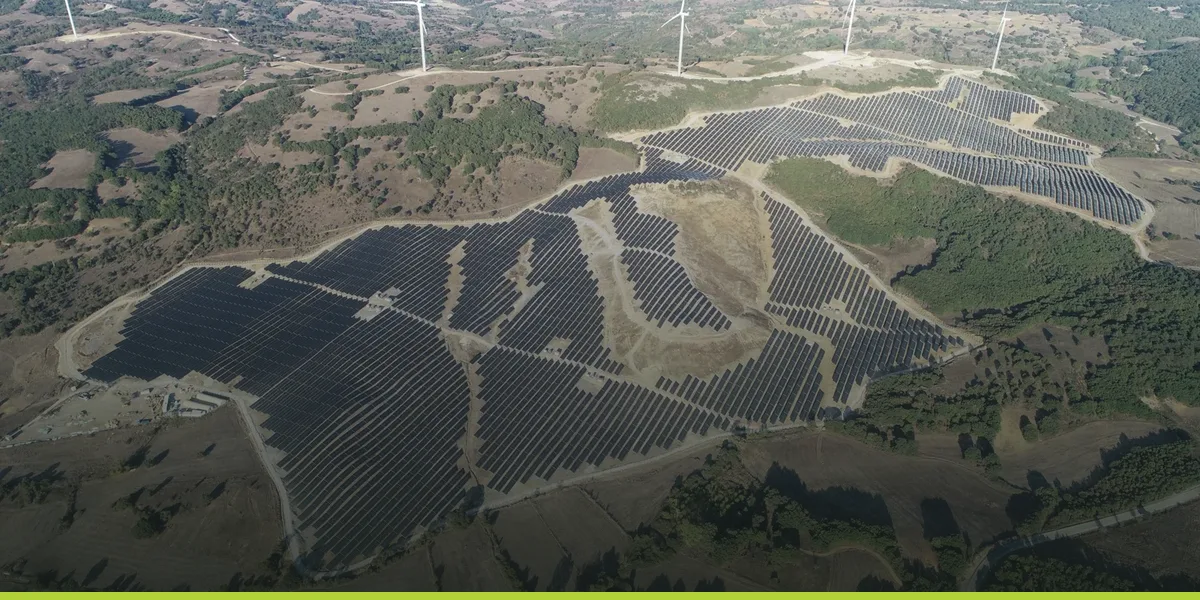
Adding a battery to a grid-connected solar plant: how hourly netting affects storage economics, the difference between AC- and DC-coupled architectures, how the correct power and capacity are determined, and the distinction between outage back-up and peak management.
| TECHNICAL REVIEW | UPDATED | READING TIME |
|---|---|---|
| Alkın Ankaralı — Deputy General Manager, Energy Projects | August 2026 | 13 minutes |
Contents
- Summary in five sentences
- Why did hourly netting put batteries on the agenda?
- AC or DC?
- Capacity or power?
- Which facilities does it make sense for?
- Back-up and energy shifting are not the same thing
- Safety and siting
- Frequently asked questions
- How is the decision made?
Adding a battery to a grid-connected solar plant was already being assessed in the past for purposes such as outage back-up, peak shaving, power quality, operational continuity and connection/capacity management. The economic value of energy shifting, meanwhile, depended on the generation-consumption profile and the netting structure.
HOURLY NETTING — The move to hourly netting at the relevant unlicensed generation facilities as of 1 May 2026 made the economic value of storage for energy shifting more visible. At facilities within the scope of hourly netting, surplus generation within one hour is not netted directly against consumption in another hour. The netting period applicable to a facility must be assessed according to the scope and exceptions in the Regulation.
This does not mean “a battery for every facility”. This article explains how the decision is made.
Summary in five sentences
- Hourly netting made the economic value of energy shifting more visible, particularly at facilities where generation and consumption are concentrated in different hours.
- Alongside energy shifting, a battery may also be assessed for outage back-up, peak shaving, power quality, operational continuity and connection/capacity management.
- AC coupling is frequently considered on retrofit projects and DC coupling on new hybrid projects; the final choice is made through project-specific engineering work.
- Battery capacity is expressed in kWh and power in kW; PCS power, usable energy and operating duration are separate design decisions.
- Outage back-up and energy shifting are different purposes; protection, islanding and control architectures also differ.
Why did hourly netting put batteries on the agenda?
A battery makes it possible to shift surplus generation, which may have a low economic value, to consumption hours where it may deliver higher value. The economic benefit must be calculated as the difference between the alternative value of surplus energy and the avoided cost of consumption supplied from the battery, less battery losses and other operating costs.
The outcome depends on the tariff, consumer group, metering structure, the facility’s regulatory scope, the generation-consumption profile and the battery’s operating strategy. Hourly netting makes the value of energy shifting visible; on its own it does not prove that the investment is economic.
AC or DC?
Coupling defines the electrical point at which the battery connects to the system: in AC coupling the battery connects to the AC busbar via a PCS/inverter; in DC coupling, PV and the battery connect to a hybrid power conversion system over a shared DC architecture.
When storage is added later to existing solar plants, an AC-coupled architecture may on most projects be the option requiring less intervention. On new installations, a DC-coupled architecture may be considered because of its potential to reduce conversion steps and equipment count in some energy flows. The final choice must be made according to the existing inverter infrastructure, connection point, power/energy requirement, operating scenario, manufacturer compatibility, grid requirements and total lifecycle cost.
Battery architecture — retrofit and new hybrid design are not the same
| AC COUPLED — RETROFIT | DC COUPLED — HYBRID | |
|---|---|---|
| Flow | PV → PV inverter → AC busbar ← PCS/BESS | PV + BESS (DC) → hybrid inverter/PCS → AC |
| Characteristics | PV strings and PV inverters can in most cases be retained · BESS may allow separate power/energy scaling · Additional AC/DC conversion steps in the energy shifting cycle and the associated losses · Additional PCS, protection and connection equipment | Fewer conversion steps in some energy flows — potential for higher round-trip efficiency · Shared hybrid power conversion architecture · Inverter and DC architecture changes may be required on retrofit · Power/capacity range depends on the PCS, DC limits and manufacturer compatibility |
GENERAL TREND — AC coupling is frequently considered on retrofit projects and DC coupling on new hybrid projects; however, the final choice must be made through project-specific engineering work.
Project effects of AC and DC coupling
In an AC-coupled retrofit solution, existing PV strings and PV inverters can in most cases be retained. Nevertheless, the AC connection point, protection system, metering, EMS/SCADA, switchboard/transformer capacity, connection capacity and any required project amendments must be assessed separately. A planned outage may be required during connection works.
In a DC-coupled solution, some energy flows may pass through fewer conversion steps; however, the actual round-trip efficiency depends on whether PV generation is directed to consumption, to the battery or to the grid, and on equipment efficiencies. It must not be assumed that DC coupling is more efficient under all conditions.
| CRITERION | AC COUPLED | DC COUPLED |
|---|---|---|
| Adding to an existing plant | Less intervention on the PV side on most projects | Hybrid inverter/DC architecture modification may be required |
| Cycle | Additional AC/DC conversion steps in energy shifting | Potential for fewer conversion steps in some flows |
| Equipment | Separate PCS/inverter and protection equipment | Hybrid inverter/PCS and compatible DC equipment |
| Scalability | Depends on PCS, connection and system limits | Depends on PCS power, DC voltage-current and manufacturer limits |
| Installation impact | A planned outage may be required for connection works | A more extensive outage may be required when modifying the existing system |
Adding a BESS to an existing unlicensed solar plant: permitting and technical process
PROJECT-SPECIFIC ASSESSMENT — Adding storage to an existing solar plant must not be treated merely as adding equipment. The connection type, operating purpose and energy exchange with the grid must be assessed in terms of the existing connection agreement, the approved project and the relevant storage/unlicensed generation legislation. Before implementation, the necessary modifications, permits, connection and acceptance procedures must be determined project by project with the relevant network operator and the project approval/acceptance authorities.
- How the AC or DC connection of the storage unit affects the existing connection point and the protection/metering arrangement is examined.
- Whether the existing call letter, connection agreement and approved project require modification or an additional connection/technical assessment must be assessed project by project within the framework of the relevant network operator, the project approval/acceptance authorities and the storage/unlicensed generation legislation in force.
- Storage power (kW/MW) and energy capacity (kWh/MWh) are assessed together with the solar plant capacity, connection capacity, PCS limits, operating scenario and grid criteria.
- The metering and control architecture for charging from the grid, feeding stored energy into the grid, energy direction separation and netting outcomes must be established in accordance with current legislation and the approved operating scenario.
- Project approval and facility acceptance for electricity storage units/facilities are expressly regulated in the current Ministry authorisation table; the competent authority is determined by facility capacity, capacity, connection level and location.
- Taking into account the facility’s connection level and the relevant network operator, TEİAŞ’s current electricity storage connection/compliance criteria and the technical requirements of the relevant distribution network must be checked for applicability. If participation in ancillary services is targeted, TEİAŞ’s technical criteria and test procedures dated 03.07.2026 must also be assessed.
AC and DC retrofit architectures do not automatically create a different permitting class from an administrative perspective; however, because the electrical connection, protection, metering and forms of intervention in the existing project differ, the required modification and test scope may change.
Capacity or power?
A battery is defined by two separate quantities, and confusing them is among the most common mistakes:
- Capacity (kWh/MWh) — the amount of energy that can be stored. Usable capacity may differ from nominal capacity because of the SOC operating window, DoD and operating reserves.
- Power (kW/MW) — the charge/discharge power the PCS can deliver at a given moment. It is decisive in scenarios such as motor starting, peak power and island operation.
SHORT EXAMPLE — For instance, a 500 kW / 1,000 kWh BESS nominally has a power/energy ratio of roughly 2 hours; the actual usable duration depends on the SOC window, efficiency and operating limits.
The battery power and capacity range depends on the power, DC voltage-current and system architecture limits of the hybrid inverter/PCS and on manufacturer compatibility. Energy capacity comes to the fore for shifting evening consumption; power sizing comes to the fore for covering heavy loads or peak draw.
Which facilities does it make sense for?
| VALUE COMPONENT | POSSIBLE EQUIVALENT IN THE PROJECT |
|---|---|
| Separation of generation and consumption by hour | Self-consumption optimisation and energy shifting at facilities with strong evening/night load. |
| High cost of outages | Risk reduction in cold chain, continuous process, data centre or critical services. |
| Peak shaving / capacity management | Cases where the consumer’s tariff, contract and connection structure contains capacity/peak-driven costs, or where managing connection capacity creates economic value. |
| Power quality and operational continuity | Voltage events on sensitive loads, process continuity and controllable power support. |
| Management of connection constraints | Generation curtailment, power ramping and connection point management to the extent permitted by legislation and connection conditions. |
Where the consumer’s tariff, contract and connection structure contains capacity/peak-driven costs, or where managing connection capacity creates economic value, a battery may be used for peak shaving. The economic benefit must be calculated on the facility’s actual bill and load data.
VALUE STACKING — BESS value does not consist of energy arbitrage alone. Depending on the project, self-consumption optimisation, energy shifting, peak shaving, reduction of outage cost, power quality, management of connection constraints and other services permitted by legislation may be assessed together. Revenue items not expressly permitted by legislation for an unlicensed solar plant must not be written into the feasibility study.
Back-up and energy shifting are not the same thing
For energy shifting, a BESS can operate in parallel with the grid; it is not obliged to switch to island operation during an outage. Outage back-up, on the other hand, requires a different protection and control architecture.
For outage back-up, the system must be safely separated from the grid and designed to suit island operation. Depending on the project, transfer/isolation equipment, a critical load board, a grid-forming PCS/inverter, protection coordination, anti-islanding functions, a suitable control system and, where required, black-start capability must be assessed.
With sufficient power, energy capacity and island operation infrastructure, wider load groups can be backed up; however, at industrial facilities, separating critical loads is often the more suitable solution technically and economically. Motor starting currents, load priorities and PCS power capacity must be taken into account in the design.
Safety and siting
The siting solution must be determined according to battery chemistry, energy capacity, manufacturer requirements, fire safety, access and escape conditions and the technical legislation in force. Depending on the project, an outdoor container, a dedicated technical room or another suitable siting solution may be used.
| TOPIC | TO BE ASSESSED IN DESIGN |
|---|---|
| Cell/battery chemistry and thermal runaway | Chemistry-specific hazard analysis, limiting propagation and manufacturer instructions. |
| BMS and electrical protection | Cell balancing, voltage/temperature monitoring, isolation and safe shutdown. |
| HVAC / thermal management | Temperature uniformity, performance, and management of calendar and cycle ageing. |
| Detection and response | Fire detection, a response system suited to the chemistry and, where required by the project, gas detection. |
| Emergency and siting | Emergency stop, access/escape, fire brigade access and safety distances per project/legislation. |
| EMS/SCADA monitoring | SOC, power, alarms, temperatures, event logs and remote monitoring/control. |
Exact safety distances and response design must not be determined by a fixed value in a blog article; they must be engineered according to the facility layout, capacity, battery chemistry, manufacturer documents, risk analysis and the fire and electrical legislation in force.
Battery life and warranty
Battery life is determined not by cycle count alone, but by the combined effect of calendar ageing, cycle count and depth (DoD), temperature, C-rate, average SOC and operating conditions.
BESS warranties are generally based on a combination of criteria such as years, energy throughput or cycle count, and the minimum remaining capacity at the end of the warranty period. When comparing offers, usage conditions, throughput limits and the remaining capacity warranty must be assessed alongside the warranty duration.
Frequently asked questions
Do I have to dismantle my existing plant?
In an AC-coupled retrofit solution, existing PV strings and PV inverters can in most cases be retained. However, connection, protection, metering, EMS/SCADA, switchboard/transformer capacity and project modifications are assessed separately; a planned outage may be required.
If I add a battery, does my permitting process start again?
Adding storage to an existing solar plant is not merely adding equipment. Depending on the connection type and operating scenario, the necessary modifications, connection assessment, metering and acceptance procedures must be determined project by project with the relevant network operator and the project approval/acceptance authorities.
How many years does a battery last?
Life depends on calendar ageing, cycles/DoD, temperature, C-rate, average SOC and operating conditions. Warranty years, throughput/cycles and end-of-period minimum capacity criteria must be read together.
Will my whole factory run during an outage?
With sufficient power, energy and island operation infrastructure, wide load groups can be backed up; however, separating critical loads is often more suitable. Motor starts, load priorities and PCS power are calculated separately.
Without hourly netting, would a battery not have made sense?
The rationale for outage back-up, peak shaving, power quality, operational continuity and connection/capacity management already existed. Hourly netting made the economic value of energy shifting more visible.
How is the decision made?
A BESS decision must be made not by intuition or simple payback alone, but with a techno-economic model running on hourly/15-minute data. Core inputs:
- At least 12 months of hourly/15-minute consumption and actual/simulated solar generation
- Outage data, critical loads, motor starts, contracted power and the bill/tariff structure
- The alternative economic value of surplus energy and the avoided cost of purchased electricity
- BESS nominal and usable capacity, PCS power, SOC operating window, DoD, C-rate and round-trip efficiency
- Calendar/cycle degradation, annual throughput, warranty limits and augmentation/replacement needs
- CAPEX, annual OPEX, financing cost/discount rate, project life and any residual value
- EMS/control strategy: energy shifting, peak shaving, reserve, critical load and charge/discharge priorities
The model must calculate together when during the year, at what power and with how much energy the battery will operate, along with losses and degradation. Depending on project scale, indicators such as NPV, IRR, discounted payback and LCOS may be used; simple payback alone is not a sufficient decision criterion.
11:11 Solar Energy carries out feasibility studies based on hourly data analysis, project-specific AC/DC architecture selection, system design, installation and operation-maintenance work on hybrid and storage projects, according to project scope.
Official sources
- Regulation on Unlicensed Electricity Generation in the Electricity Market — current/consolidated text.
- Netting Procedures and Principles adopted by Energy Market Regulatory Board Decision No. 14531 dated 30.04.2026 — Official Gazette No. 33244 dated 05.05.2026.
- Regulation on Storage Activities in the Electricity Market — current text.
- Electricity Grid Regulation — current text.
- Electrical Installations Project Regulation and the Regulation on the Acceptance of Electricity Generation and Electricity Storage Facilities.
- Republic of Türkiye Ministry of Energy and Natural Resources — Electrical Installations Project Approval and Acceptance Authorisations (2025 revision; 18.06.2025–31.12.2028).
- TEİAŞ — Grid Connection and Compliance Criteria for Electricity Storage Facilities, 27.02.2026.
- TEİAŞ — Technical Criteria and Test Procedures for the Use of Electricity Storage Units or Facilities in Ancillary Services, 03.07.2026.
- EMRA — official announcement on applications for electricity storage units integrated into electricity generation facilities and for standalone electricity storage facilities, and current storage legislation pages.
INFORMATION NOTE — This guide is for general information purposes. When adding a BESS to an existing unlicensed solar plant, the category, modifications, connection, metering, charge/discharge constraints, project approval and acceptance procedures must be verified with the relevant network operator and the competent authorities according to the facility’s existing documents, connection level, architecture and operating scenario.